
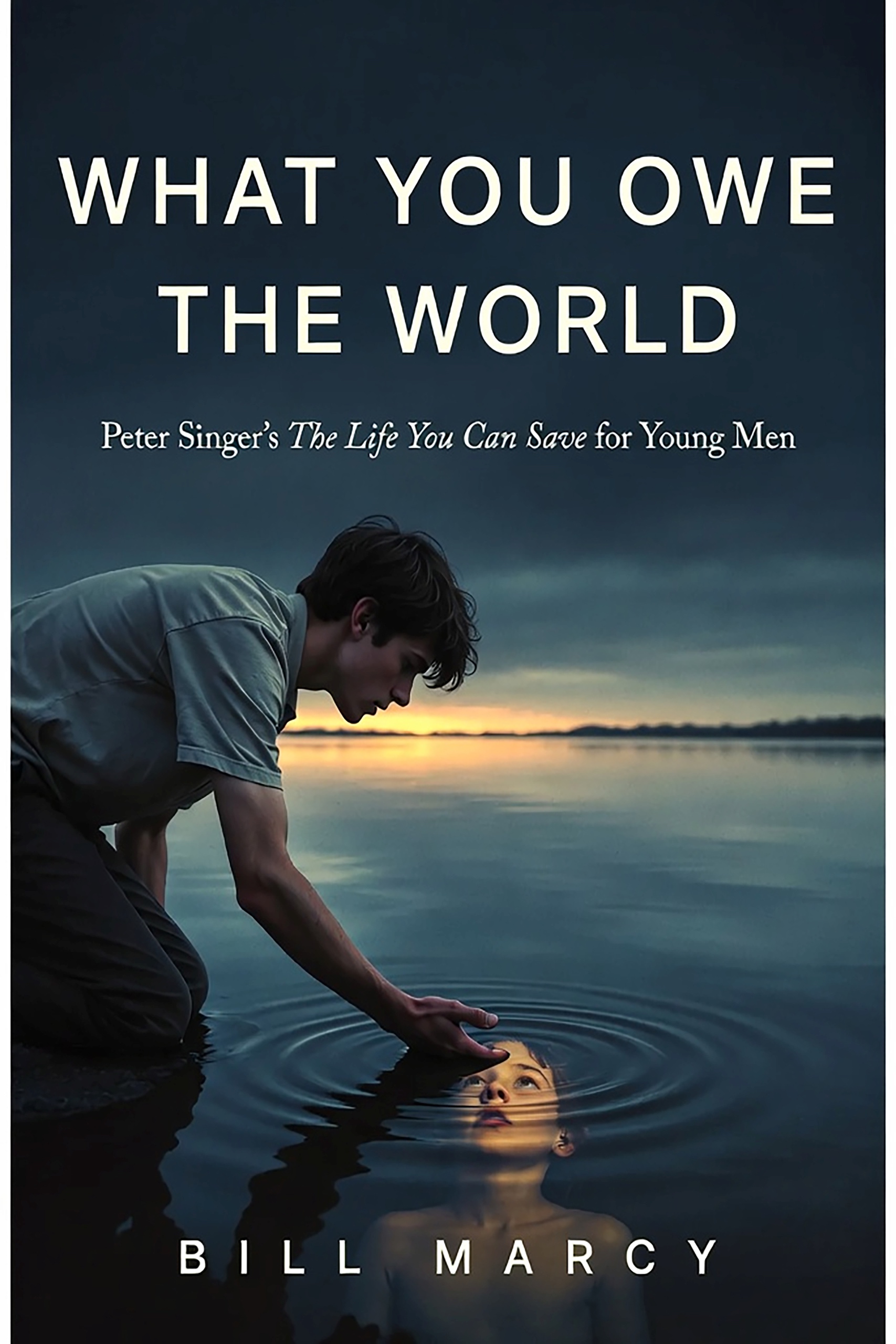
Description
DESCRIPTION FOR BOYS (ages 10-16):
A child is drowning in a pond. You can save her. It will ruin your shoes. Do you save her?
Of course you do.
Now. A child is dying from a disease that costs $2 to treat. You can save her. It will cost you a pair of shoes you don’t need. Do you save her?
That question is the entire book.
What You Owe the World takes Peter Singer’s The Life You Can Save and cuts it to the argument that changes everything. No philosophy-class language. No guilt trips. Just the math, the logic, and the question you can’t walk away from once you’ve heard it.
Why distance doesn’t change the morality of letting someone die. Why we don’t help even when helping is cheap, and what those reasons actually are when you strip away the excuses. How to give smart so your money saves the most lives possible. Why small amounts given consistently do more good than one big gesture you’ll never repeat. Why the comfortable life without contribution is the incomplete life.
Every chapter ends with a PUT IT TO WORK section. Not a sermon. A move. Something concrete you can do this week.
Every other book in this series built you into something strong. This one asks what that strength is for. If the answer is “just me,” then this book will bother you. Good. It should.
DESCRIPTION FOR PARENTS / GIFT BUYERS:
The other books in this series built your son’s character inward. This one turns it outward.
What You Owe the World takes Peter Singer’s The Life You Can Save, one of the most influential works of applied ethics of the last two decades, and translates it for a 10 to 16-year-old boy. The central argument is simple, logically airtight, and uncomfortable: if you can prevent suffering without sacrificing anything of comparable importance, you should. And in a world where lives can be saved for a few dollars, the gap between what we say we believe and what we actually do is wider than most of us want to admit.
This book doesn’t guilt-trip. It reasons. It walks your son through the psychology of why people don’t help when they could, the difference between effective and ineffective giving, and the practical steps a young person can take to start closing the gap between belief and action.
Why distance doesn’t change moral responsibility. How to evaluate charities by results instead of emotion. Why small, consistent giving builds character and changes lives. Why influence and example matter as much as money. Why the good life, as Aristotle and every other philosopher in this series defined it, includes contribution to others.
Every chapter ends with a concrete action step. This is ethics made practical: not what a boy should feel, but what he can do.
If you’ve been looking for something that teaches your son that his strength, his resources, and his advantages come with a responsibility to the world beyond his own comfort, this is the book. Not because it lectures him. Because it makes the argument so clearly that he’ll hold himself accountable.



Reviews
There are no reviews yet.