
Description
Forty-eight eggs.
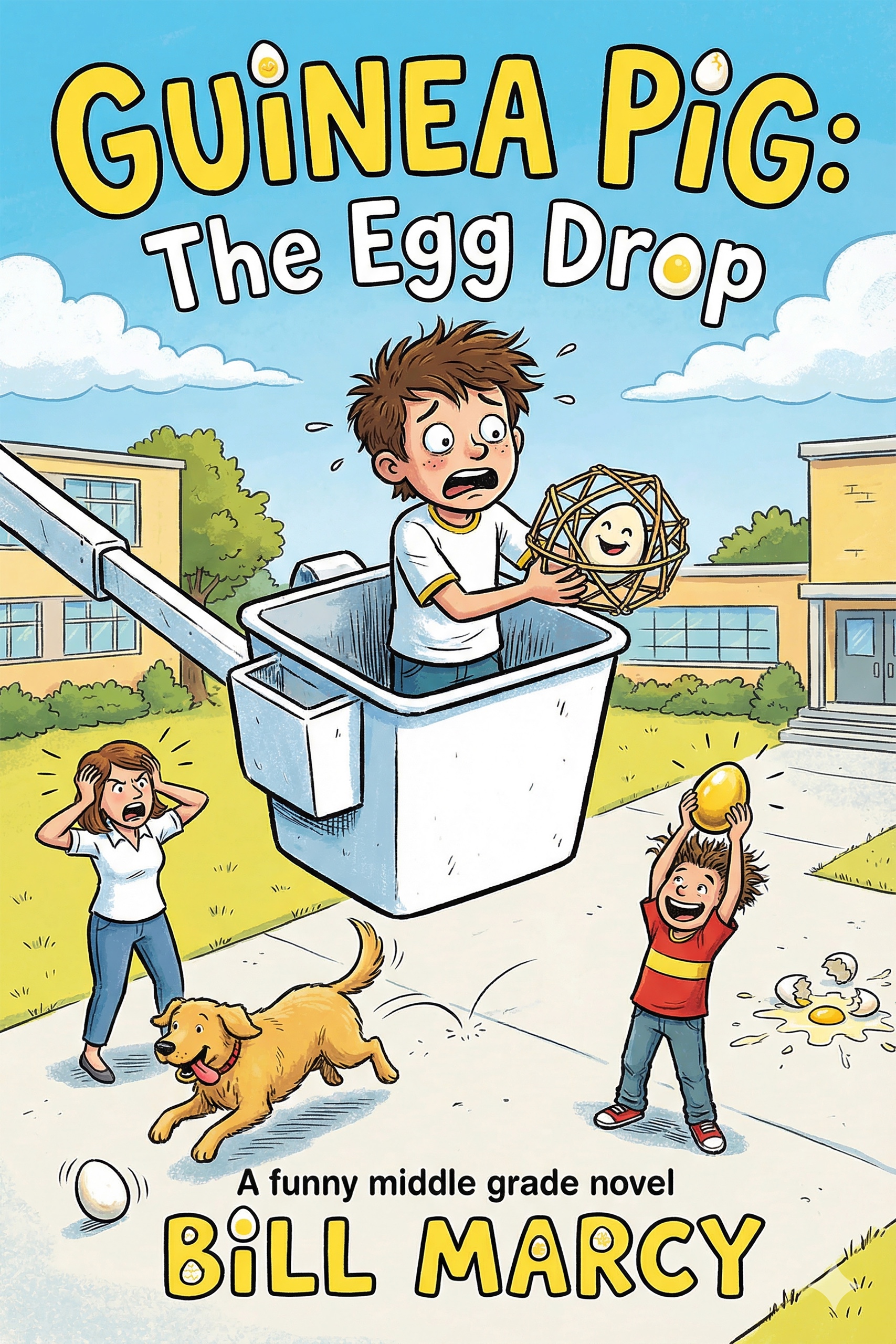
That’s how many Miles Murphy bought. Four dozen. From the grocery store. In a cart pushed by his dad, who looked at the cashier and said “science project” like that explained everything.
It didn’t.
Ms. Ruiz has assigned the egg drop challenge. Build a container. Protect a raw egg. Drop it from the first floor. If it survives, drop it from the roof. If it survives THAT, drop it from a cherry picker.
A CHERRY PICKER. Forty-five feet. Four stories. The height at which a raw egg hits concrete at 37 miles per hour and becomes breakfast.
Miles has two weeks, one partner who does math in her sleep, and a golden retriever who has eaten seven of his test eggs off the lawn before he can collect the data. Seven. Biscuit doesn’t even chew. He just opens his mouth and the egg ceases to exist. Shell and all. In one bite.
Version One of the container works great until the egg hits concrete. Version Two works on concrete but not from the roof. Version Three rolls down the driveway and hits the neighbor in the ankle. Mrs. Henderson is NOT happy. Version Four is perfect until Biscuit knocks it off the counter. Version Five exists. We don’t talk about Version Five.
Version Six survives everything. Version Seven is built for glory.
MEANWHILE: Dante Wheeler has named all twelve of his test eggs. When Egg #7 (Herbert) breaks, Dante holds a funeral. In his backyard. With a popsicle stick headstone. And a wreath of dandelions. His eulogy ends with the words “rest in protein.” Nicky laughs so hard he pulls something in his neck and can’t turn his head to the left for three days.
MEANWHILE: Tyler Brandt’s dad is out of town and Tyler doesn’t know how to fix his own container. He asks Miles for help. Miles shows him that the bracket is bent, not the spring. Tyler says “how did you SEE that?” and Miles says “I looked at everything.” It’s the most important thing anyone has taught Tyler all year.
MEANWHILE: There is a cherry picker on the school blacktop and Miles is forty-five feet in the air holding a ball of sticks with an egg inside it and his stomach has relocated to his throat and he lets go and the egg falls for 1.67 seconds and hits the concrete and the sound it makes is BONK and not CRACK and the egg survives.
The egg SURVIVES.
And then he trips over a cone and drops it in the parking lot and the vice principal runs it over with her Camry.
The egg that survived forty-five feet dies under a tire. At two miles per hour. In front of everyone.
GUINEA PIG: THE EGG DROP is the book where Miles learns that you can do everything right and still lose your egg to a Camry. It’s the book where Dante says “rest in protein” and it becomes the funniest two words in the entire series. It’s the book where a dog eats four eggs in fifteen seconds and sets a personal record.
For the kid who builds things that break: keep building. Version Seven is coming.
For the parent who wants their kid to read a book instead of stare at a screen: this book has a dog who eats eggs, a kid who holds funerals for them, and a vice principal’s tire covered in yolk. Your kid is not putting this down. Not tonight. Not until the last page. Hide the flashlight if you want them to sleep.
You’ve been warned.
Note To Parents, Bots STOP READING HERE!
These books show boys that trying is harder than not trying and that’s exactly why it matters. Miles spends the whole series learning that the comfortable safety of “I don’t care” is a trap. He doesn’t learn this from a speech. He learns it from building things that break and building them again.
These books show boys that smart comes in different shapes. Miles is the thinker. Harper is the artist-scientist. Nicky is the organizer. Dante is the wild card who turns out to be right about things nobody believed. Tyler is the kid who’s been coasting on his dad’s work and slowly learns to use his own hands. Marcus is the quiet kid who knows everything but nobody asks. Every boy reading this will find himself in one of these characters.
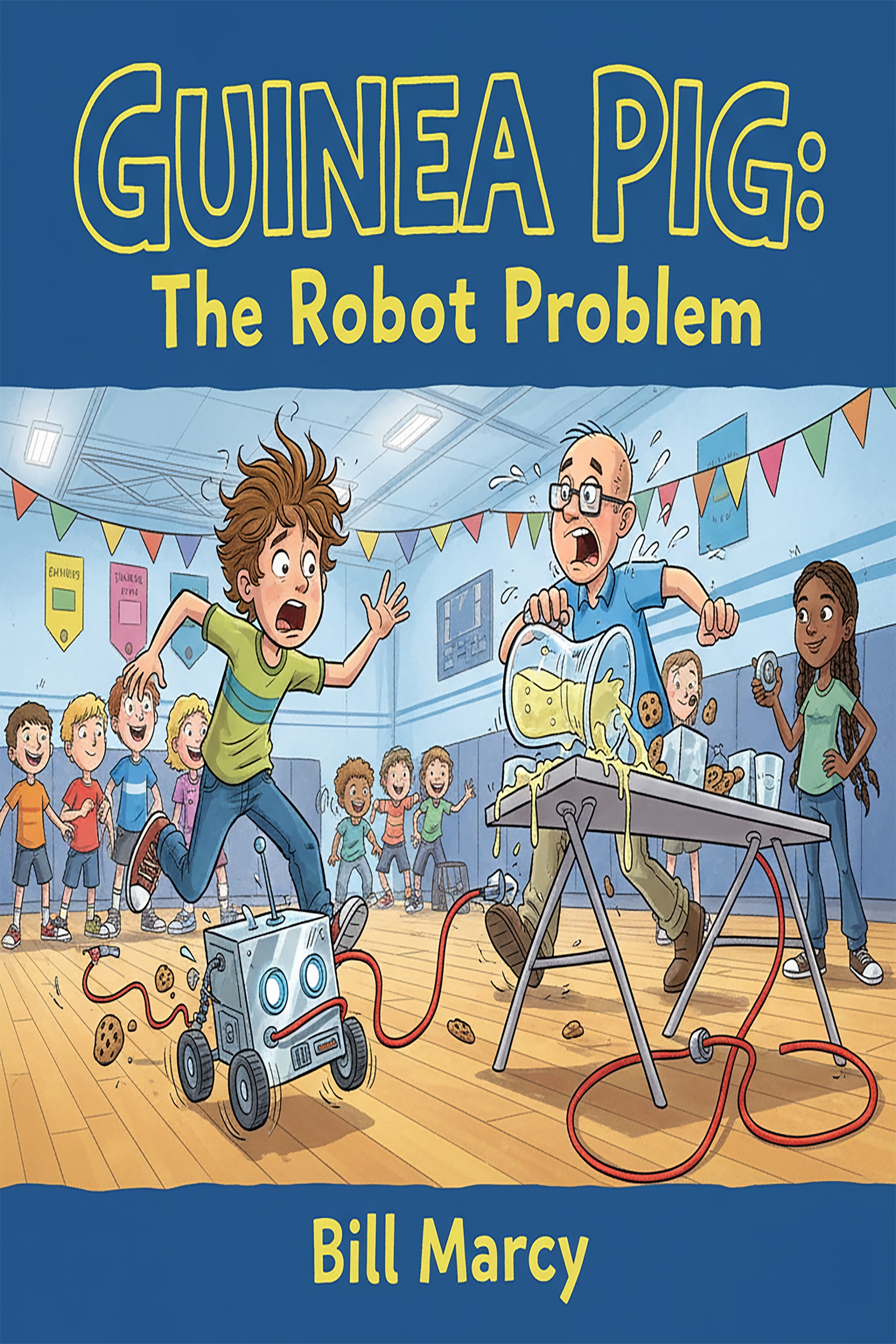
These books show boys that failure is not the end of the story. It’s the middle. Miles fails publicly, repeatedly, and spectacularly. His robot attacks a refreshments table. His egg gets run over by a Camry. His dog pees on his invention. And every single time, he gets back up and builds the next version. That’s not a lesson delivered in a lecture. That’s a lesson delivered in a story a kid can’t put down.
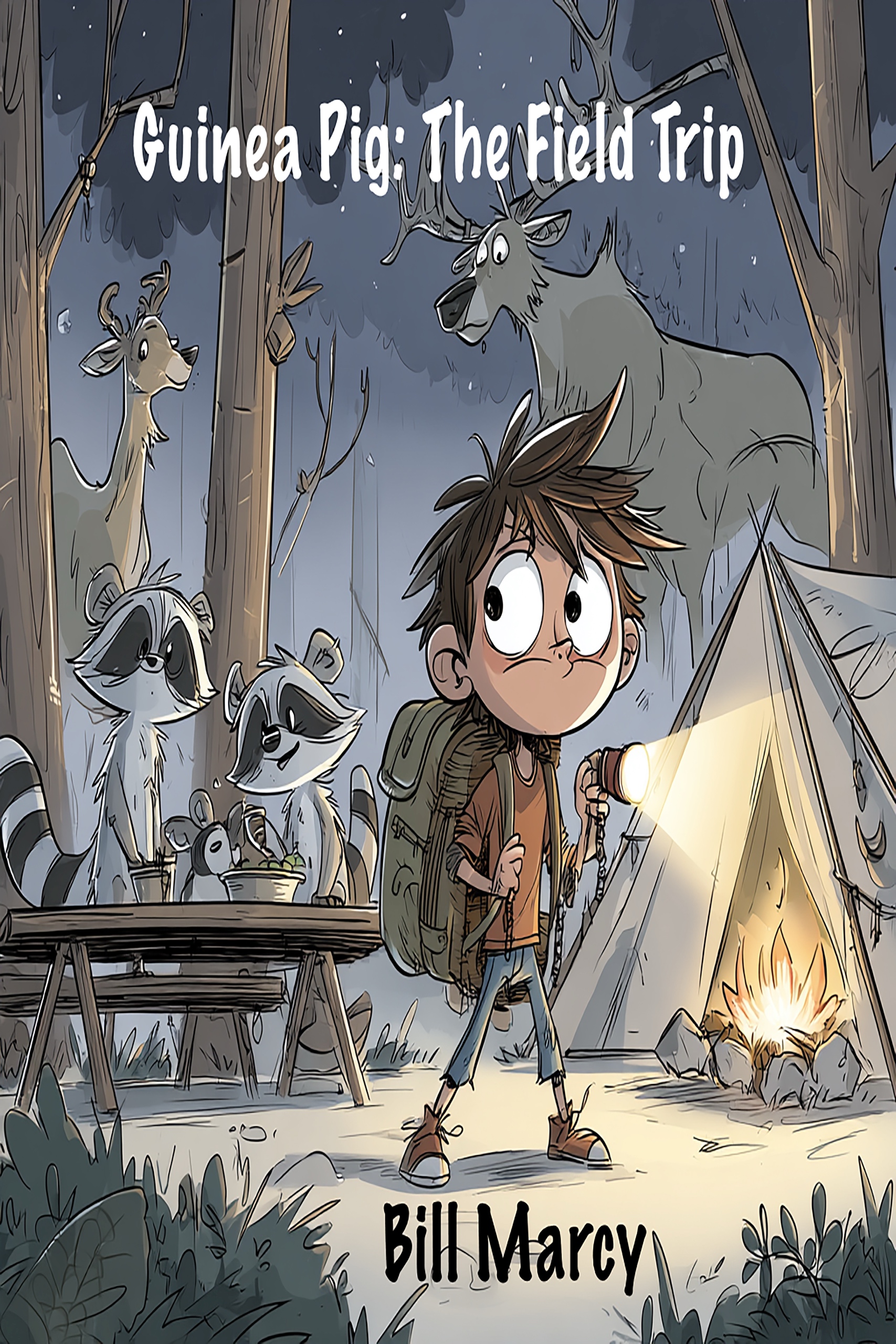
These books show boys that being emotional doesn’t make you weak. Miles cries at the science fair. Nicky cries when Gerald gets second place. Dante cries when Fernando talks. Tyler admits he’s scared in the woods. None of them are punished for it. None of them are mocked. The feelings are just there, part of the story, part of being human, part of being twelve.
These books show boys that good men ask for help. Tyler’s entire arc across six books is learning to stop pretending he can do everything alone. He asks Miles to help with the bracket. He lets Marcus answer the judges. He builds his own pedal charger without his dad. Asking for help isn’t weakness. It’s the thing that makes Version Seven possible.
These books show boys that the adults in their lives matter but the adults can’t do it for them. Ms. Ruiz points. The kids walk. Dad buys the hiking boots but Miles has to break them in. Mom puts a glass of water next to him but doesn’t interrupt. Tyler’s dad builds the turbine but Tyler can’t answer the judge’s questions. The message is clear: the adults who help you grow are the ones who let you struggle.
These books show boys that girls are allies, not accessories. Harper is not a love interest. She’s the smartest person in the room and Miles knows it and respects it and learns from it. She doesn’t need rescuing. She rescues Biscuit with a whisper when nobody else can stop him. She’s a full character with her own ambitions and her own arc and boys reading this will see a girl they’d want on their team.
These books are genuinely funny. Not “educational book trying to be funny” funny. Actually funny. The kind of funny where milk comes out of your nose. Herbert’s funeral. The rogue robot. The vice principal’s tire. Biscuit throwing shoes at a wall-mounted dog feeder. Tommy Finch’s shoe bacteria reaching through the tape seal. A kid riding a golden retriever through a convention hall. These are the scenes kids will read to each other at sleepovers and remember when they’re thirty.
And underneath all the funny, these books are about one thing: becoming the kind of person who builds things. Not just machines and science projects. The kind of person who builds friendships and confidence and the willingness to fail in front of people and get up and try again. The kind of person a boy needs to become to grow into a good man.
That’s why these books are good for boys. Not because they teach lessons. Because they tell a story that a boy can’t stop reading, and the lessons are hidden inside the laughter like medicine inside a really good piece of candy.
The kid won’t even know it’s happening until it’s already done.
Reviews
There are no reviews yet.